
Building stronger investment ecosystems in LDCs
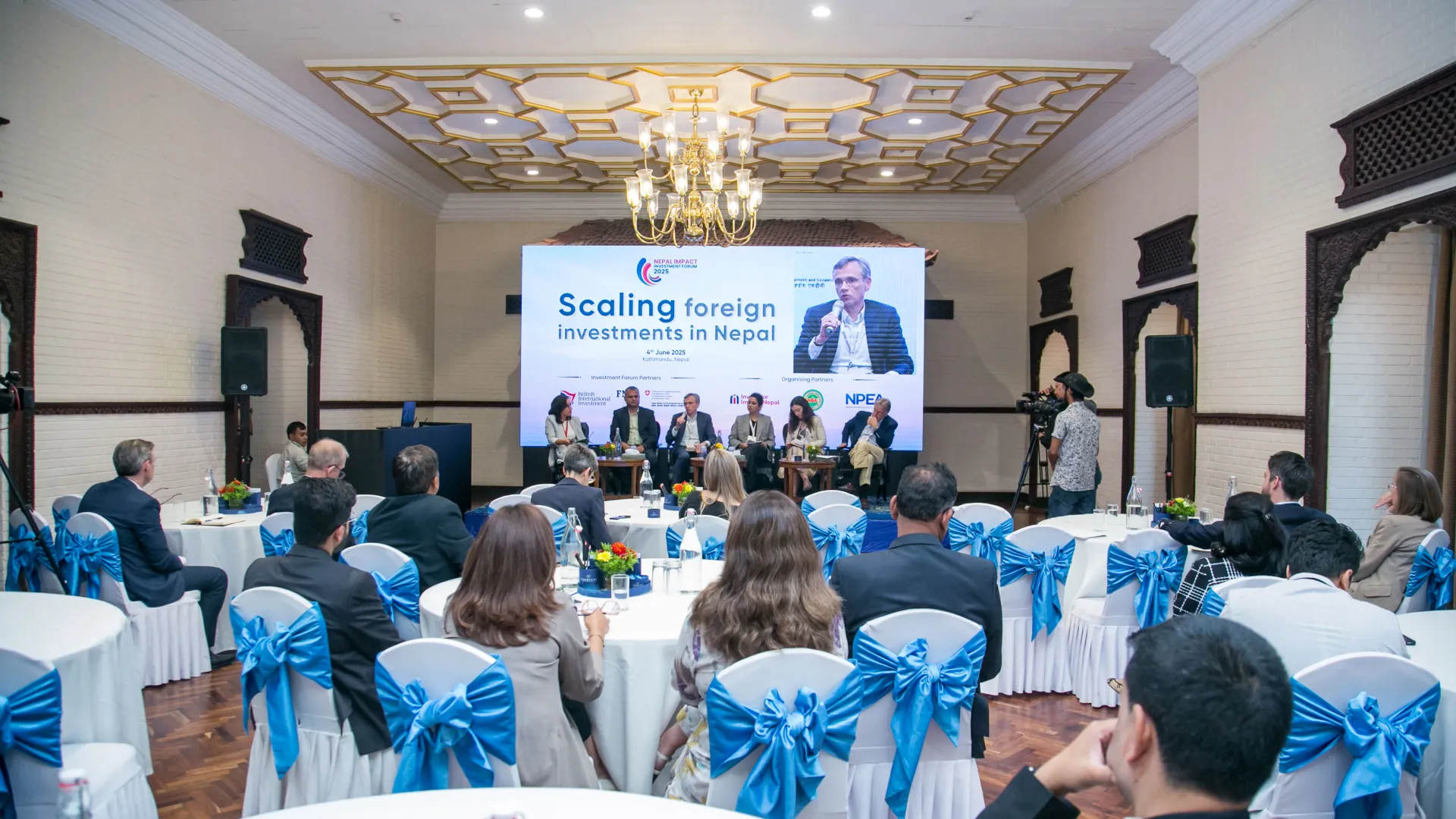
At the Nepal Impact Investment Forum 2025, the Dutch Fund for Climate and Development (DFCD), represented by FMO and SNV, joined a dedicated session on strengthening collaboration between development partners and development finance institutions to unlock climate finance in least developed countries (LDCs). Hosted in Lalitpur on 4 June, the panel brought together insights from Switzerland, the United Kingdom, and the Netherlands – with FMO and SNV sharing reflections from DFCD’s work in Nepal.
Representing DFCD, Andrew Shaw (FMO) and Biplav Kafle (SNV) highlighted how the fund’s origination and investment model is unlocking new climate-resilient opportunities in fragile markets. Their remarks focused on three core lessons from working together in Nepal, a country where high-potential climate projects exist but often need tailored support to become investment-ready, de-risking is essential, and local presence makes all the difference.
1. Partnerships take time – and that’s a good thing
One of the most powerful learnings from DFCD’s presence in Nepal is the value of patient, evolving partnerships, including among DFCD consortium members. “Our collaboration matured over time,” shared Biplav Kafle of SNV. “We came in with different tools, timelines, and impact measurement approaches, but we are learning from each other and have found a common rhythm.”
At the heart of this partnership is DFCD’s dual approach: SNV and WWF’s locally grounded work through the Origination Facility identifies and de-risks opportunities, while FMO and CFM provide follow-on investment via the Land Use and Water Use Facilities respectively. This model is particularly valuable in LDCs where the risk-return spectrum is more nuanced, and where standalone investments often fall short without targeted technical support.
“At FMO, we see DFCD as a bridge to investments that would otherwise be out of reach. By combining SNV and WWF’s origination and technical expertise with our ability to invest at scale, we’re unlocking pipelines that can deliver both impact and returns, especially in LDCs like Nepal,” said Andrew Shaw of FMO.
“SNV brings its local presence and on the ground knowledge to the DFCD. We understand the realities on the ground and what businesses actually need to become investable. That proximity, that trust, is what makes de-risking work,” said Biplav Kafle of SNV.
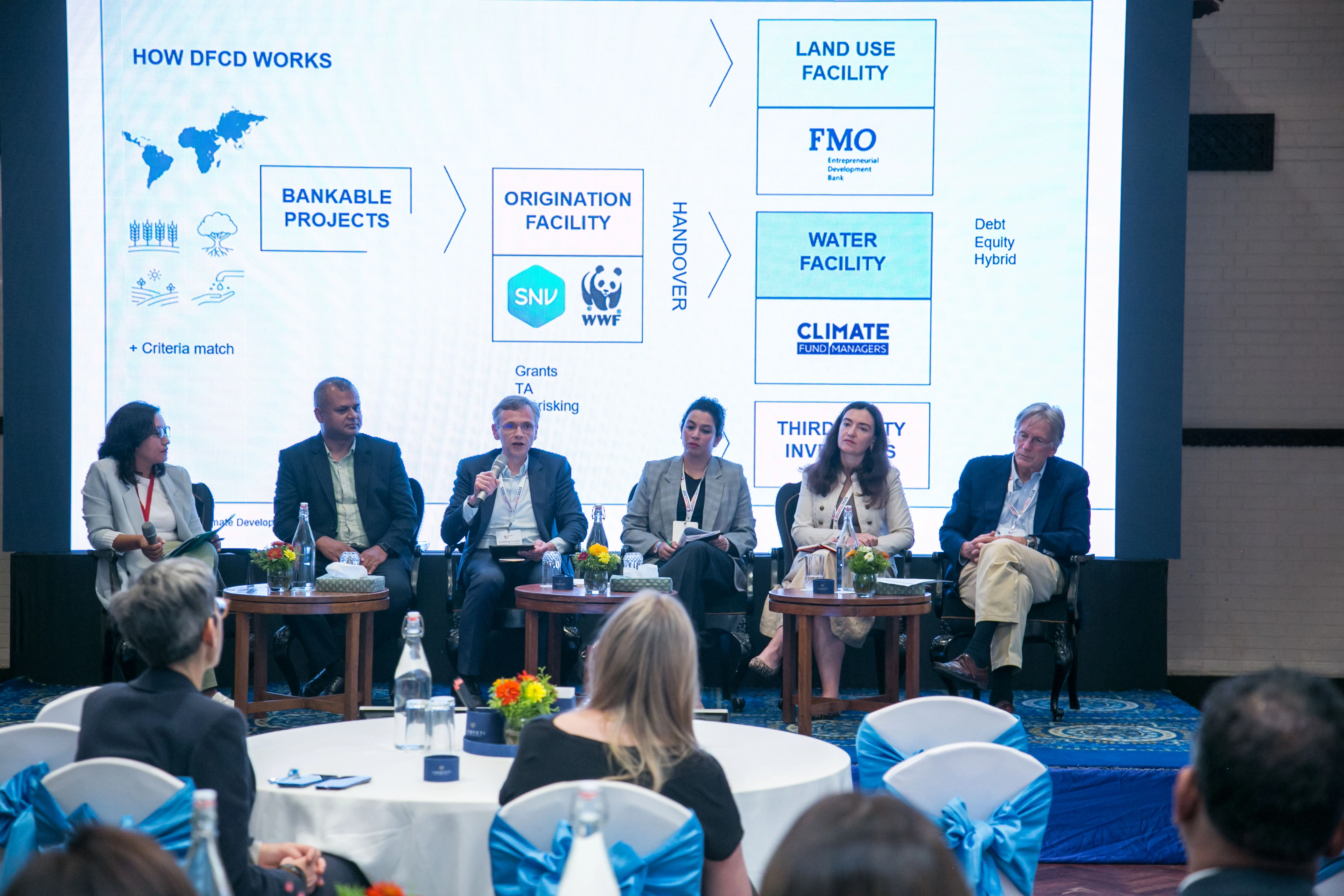 Andrew Shaw (FMO) and Biplav Kafle (SNV) presented an example of DFCD's work in Nepal.
2. Localisation adds value and efficiency
The second lesson is about proximity: having a local team embedded in the ecosystem is vital. This included the creation of a local investment committee as a decision-making structure, which has enabled rapid response, more contextualized due diligence, and better-designed technical assistance. This localisation has been instrumental in structuring DFCD’s support to NMB Bank, the first aggregator models in the country for DFCD.
While it may take time to navigate decision-making roles between local and global actors, the benefits are clear. “When we have people on the ground who know the business landscape, speak the language, and have long-standing relationships, we can design stronger, faster, and more relevant support packages,” said Biplav Kafle.
3. Grants and Technical Assistance make investments possible in LDCs
DFCD’s third key takeaway from Nepal: in LDCs, grants and technical assistance are not optional; they remain key building blocks, alongside more commercial instruments. Echoing sentiments from other speakers during the Forum, Andrew Shaw emphasized that “project and investment origination is crucial in Nepal to align businesses' investment readiness with investor criteria and to maximize impact. DFCD’s grant capital is the catalyst that makes this possible.”
Indeed, the audience discussion circled back to this repeatedly. Whether through DFCD, FCDO-led, or others, it was clear that blended finance - particularly grant-linked support - is crucial to making climate-resilient investment feasible in these contexts.
The success of the DFCD-NMB Bank partnership illustrates this in action. Rather than funding one-off projects, DFCD is helping financial intermediaries in Nepal develop broader climate-resilient investment portfolios, enabling scale and sustainability over time.
Looking ahead
The session closed with a call to deepen collaboration across donor and DFI communities. All three examples from Switzerland, the UK, and the Netherlands reflected similar conclusions: LDC investment requires strong local partners, patient capital, and blended support.
As DFCD continues its work in Nepal and beyond, these learnings will remain core to how the fund supports climate adaptation and resilience. “When we invest time in partnership, in listening, and in co-designing locally-led solutions,” said Shaw, “we unlock impact that’s both scalable and sustainable.”