Catalytic finance at the frontier: DFCD at AVPN 2025
For the DFCD, the event was an opportunity to both share lessons from our pipeline of climate adaptation projects and learn from other impact actors. The conference coincided with the rollout of FMO’s new Market Creation platform in Asia, an initiative designed to pioneer new markets in frontier economies and channel catalytic finance where it is most needed.
FMO-organised session: Allocating capital at the frontier
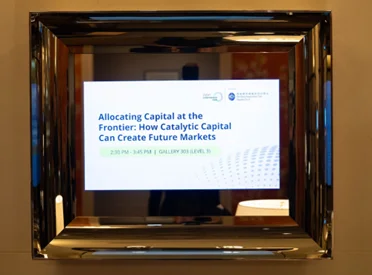
One of the conference highlights was an FMO-organised panel under the theme: “Allocating capital at the frontier: How catalytic finance can create future markets.”
The session opened with Andrew Shaw, FMO’s Head of Impact, moderating a discussion on the bank’s upstream Market Creation platform. Alan Duggan and Jerome Savelli (FMO) outlined the progression model and presented the Nepal Business Catalytic Finance Facility as a case spotlight.
This was followed by an interactive “reverse panel,” where participants were invited to shape the discussion. Speakers included:
- Alex Downs (SNV/DFCD)
- Dominic Mellor (Asian Development Bank)
- Avinash Mishra (Global Innovation Fund)
- Luke Foley (PIDG)

As part of DFCD’s Origination Facility team at SNV, Alex shared how DFCD supports businesses across Asia to overcome barriers to investment readiness and how this aligns directly with FMO’s market creation work.
“Effective market creation demands coordinated action among development finance actors — including Asian philanthropies — to deploy increasingly scarce patient capital where it matters most. AVPN clearly showcased how blended finance plays a critical role throughout this journey, from piloting innovative solutions through trial and error to scaling them with the support of de-risked private capital”. – Jerome Savelli – FMO
“At DFCD and SNV, we see every day that businesses in Asia’s frontier markets have the ideas and ambition to deliver climate and nature solutions — but they need catalytic support to cross the gap to investment readiness. AVPN was a great platform to show how upstream origination, de-risking, and technical assistance can connect to downstream capital, and to learn from others who are working toward the same goal.”– Alex Downs, SNV/DFCD
What resonated with the audience
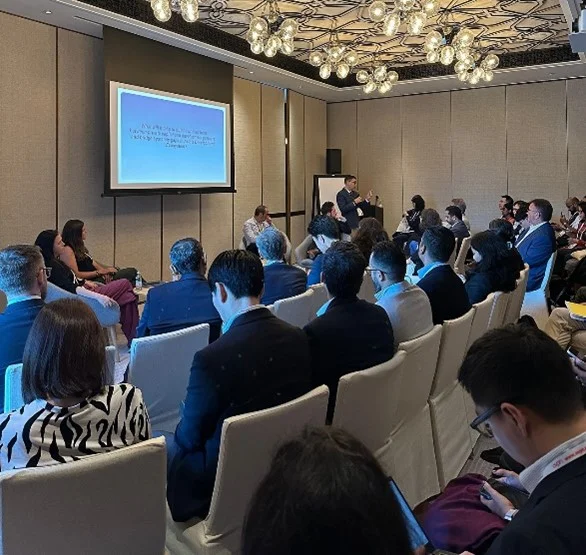
The panel attracted a dynamic audience of investors, funders, and project developers—including enterprises who are actively seeking financing pathways for innovative solutions. Audience questions zoomed in on the “how” of market creation: how blended finance structures work in practice, how risk is managed at the earliest stages, and how to ensure local ecosystems are strengthened to sustain long-term investment.
For DFCD, this reinforced a key message: catalytic finance is not just a concept, but a growing demand from both investors and enterprises who need trusted mechanisms to bridge early-stage financing gaps.
Beyond the panel: broader AVPN takeaways
While the FMO/DFCD session was a highlight, AVPN offered many more opportunities DFCD to connect, learn, and contribute to the conversation:
- Country-specific insights. Closed-door roundtables offered a deep dive into specific markets, providing a chance for investors to engage directly with case studies and explore how capital can be mobilised.
- Knowledge sharing with NGOs. With strong representation from countries including India, Bangladesh, and Indonesia, the conference gathered both funders and NGOs, creating valuable opportunities for DFCD to share insights on pipeline development, impact measurement, and the role of blended finance.
- Positioning DFCD as a flagship. Many participants were eager to understand how DFCD operates; its partnership model, origination approach, and the way it links upstream support from SNV and WWF with investment from FMO and CFM. This helped position DFCD as a tangible example of how blended finance can deliver climate adaptation and nature-positive outcomes.
Why it matters
Asia’s frontier economies face immense challenges: climate change, biodiversity loss, and financing gaps that prevent promising businesses from scaling. Addressing these requires more than capital alone. It demands trusted platforms, catalytic instruments, and collaboration across sectors.
DFCD’s experience shows that upstream, catalytic support is essential to bridge the “missing middle” between grants and commercial capital. The AVPN conference confirmed that a growing community of investors, funders, and NGOs recognises this need and is ready to collaborate.
Looking ahead
For DFCD, AVPN was not just about presenting; it was about listening, learning, and building new connections. The relationships made in Hong Kong will feed directly into our pipeline development and knowledge exchange, while inspiring us to keep pushing the boundaries of what catalytic finance can achieve.