
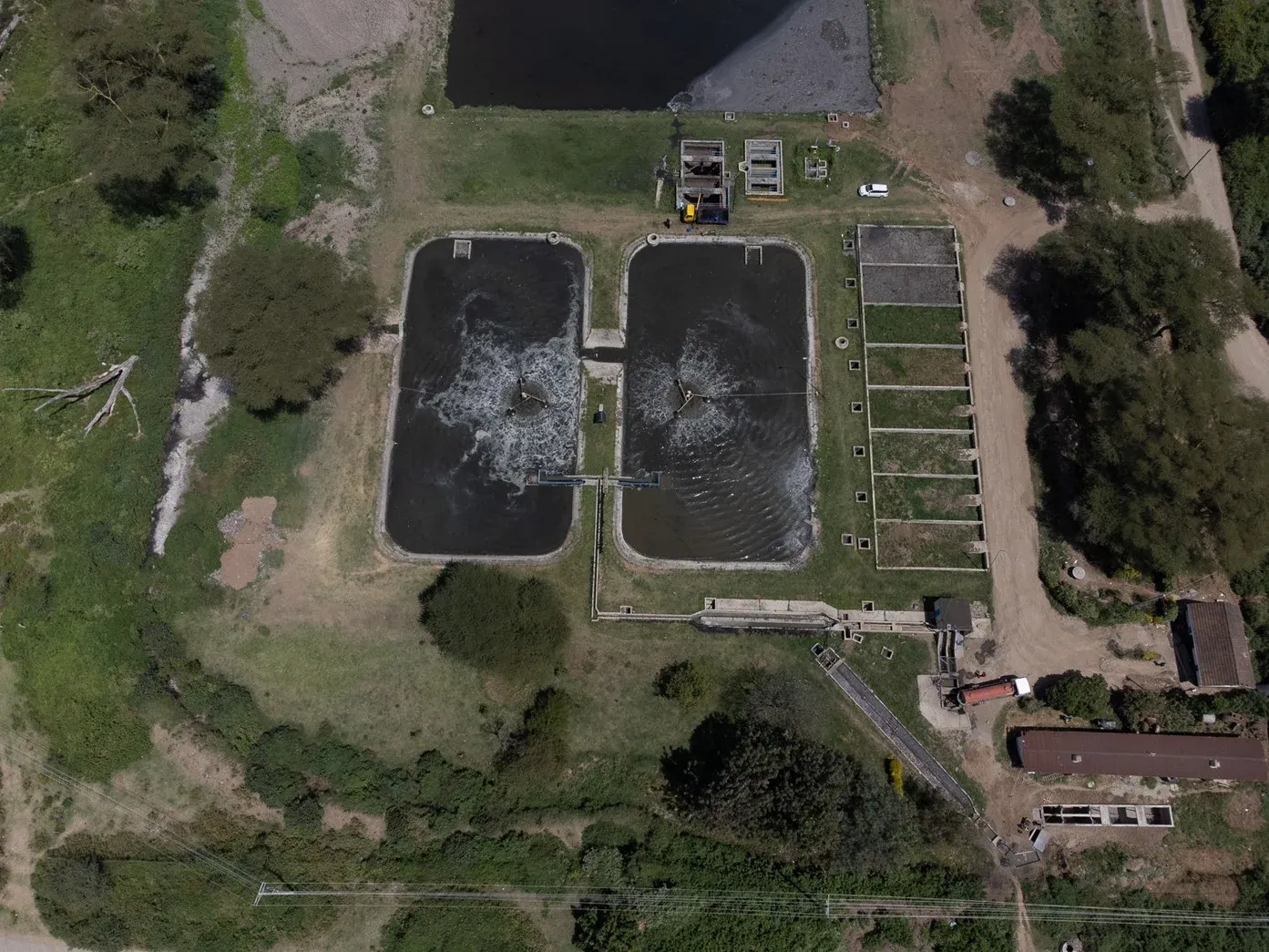
Sanivation investment to scale wastewater management in Kenya
Across Africa, the growth of cities is outpacing the systems to sustain them. Sanitation services are foundational to public health, environmental protection and climate resilience but remain one of the most challenging sectors to finance, operate and scale.
In Kenya, Sanivation is one company that has spent the past decade addressing the sanitation challenge through innovation, partnership, and a focus on community needs. Since 2023, WWF Netherlands and WWF-Kenya have partnered with Sanivation through the Dutch Fund for Climate and Development (DFCD), supporting them with environmental impact and investment-readiness. The company has now received an investment of 3.8 million USD to expand its Naivasha facility and is looking to attract further funding.
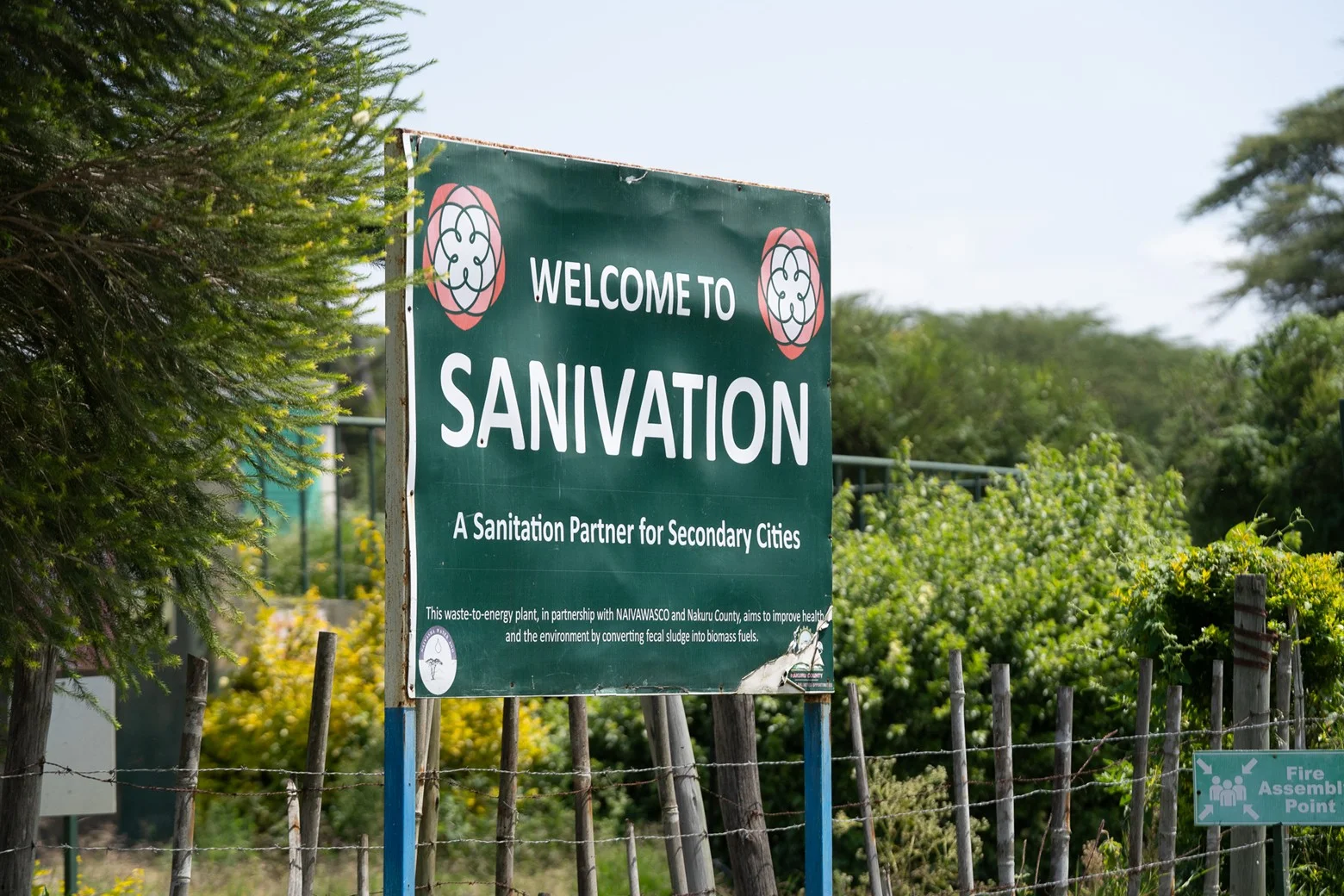
© Sanivation
A Sanitation Challenge with Climate and Health Consequences
In Naivasha, Kenya, a rapidly growing subcounty of over 340,000 residents face a sanitation crisis familiar across the region. Roughly 80 percent of households are not connected to a sewer system, leaving faecal sludge to be collected informally and often dumped into waterways. This pollution threatens Lake Naivasha, a Ramsar‑designated wetland and critical habitat for hundreds of birds and freshwater species while also increasing disease risks for nearby communities.
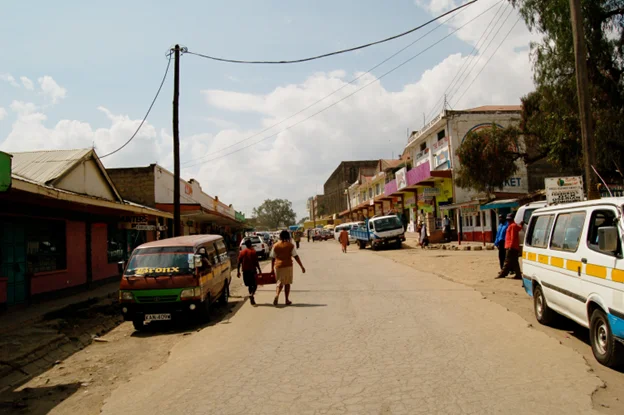
Naivasha, Kenya © Konrad Glogowski / CC BY-NC-SA 2.0
The original water treatment facility has been overworked by the population pressure and is operating well above its capacity. As a result, waste is often not safely treated or disposed of, and is instead ends up into surrounding waterways, straining ecosystems, contributing to greenhouse gas emissions, threatening public health and placing additional burden on communities already facing hardship.
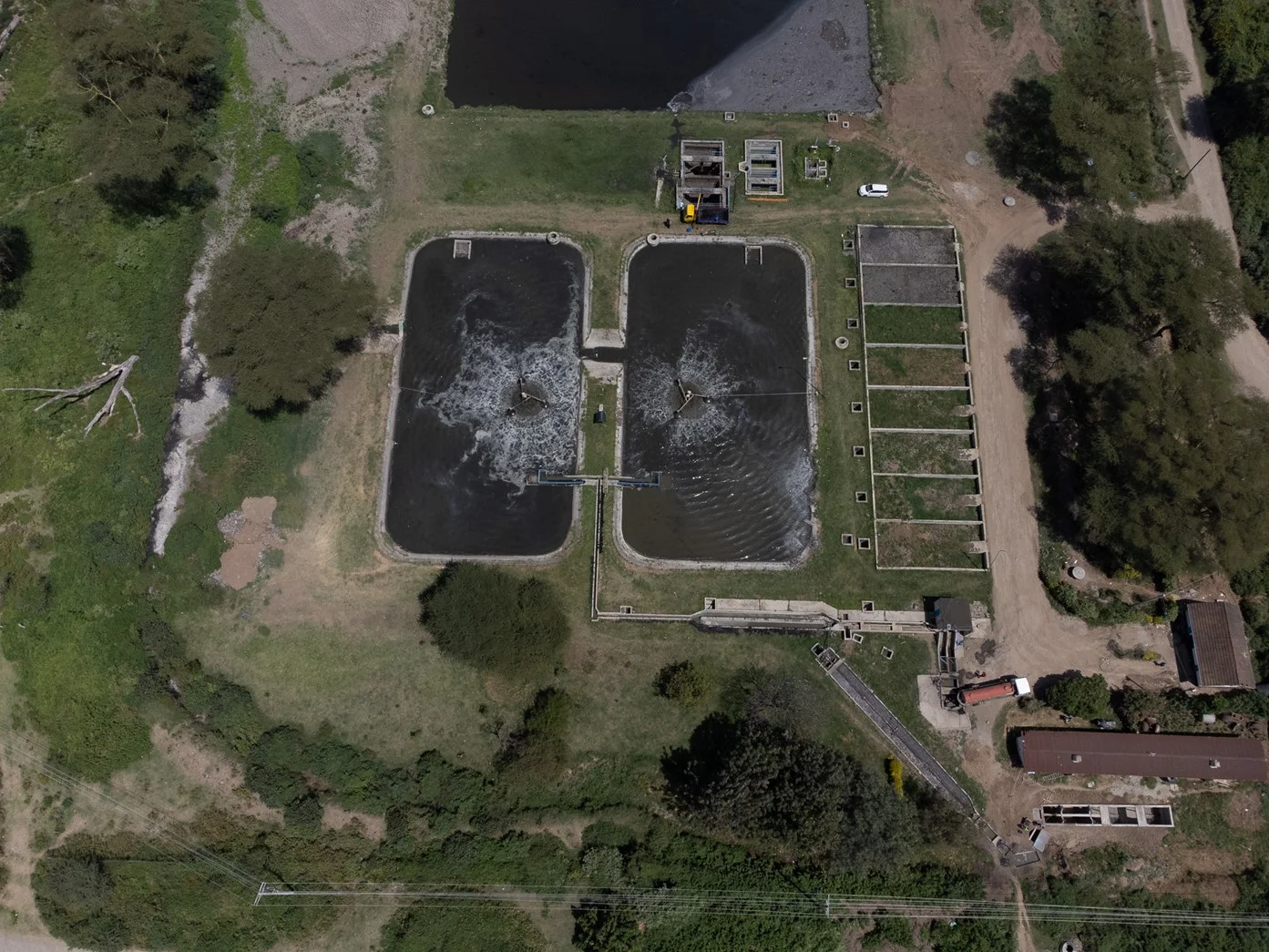
Sanivation was founded to address this circularity gap by designing, building and operating faecal sludge treatment plants (FSTPs) converting faecal sludge into clean, reliable fuel briquettes. They do this in partnership with local and national governments. In the Naivasha case, specific partners include, the County Government of Nakuru, Naivasha Water and Sanitation Company, and the Ministry of Water, Sanitation and Irrigation, making for an institutionally embedded solution that reduces pressure on natural resources and create green economic opportunities.
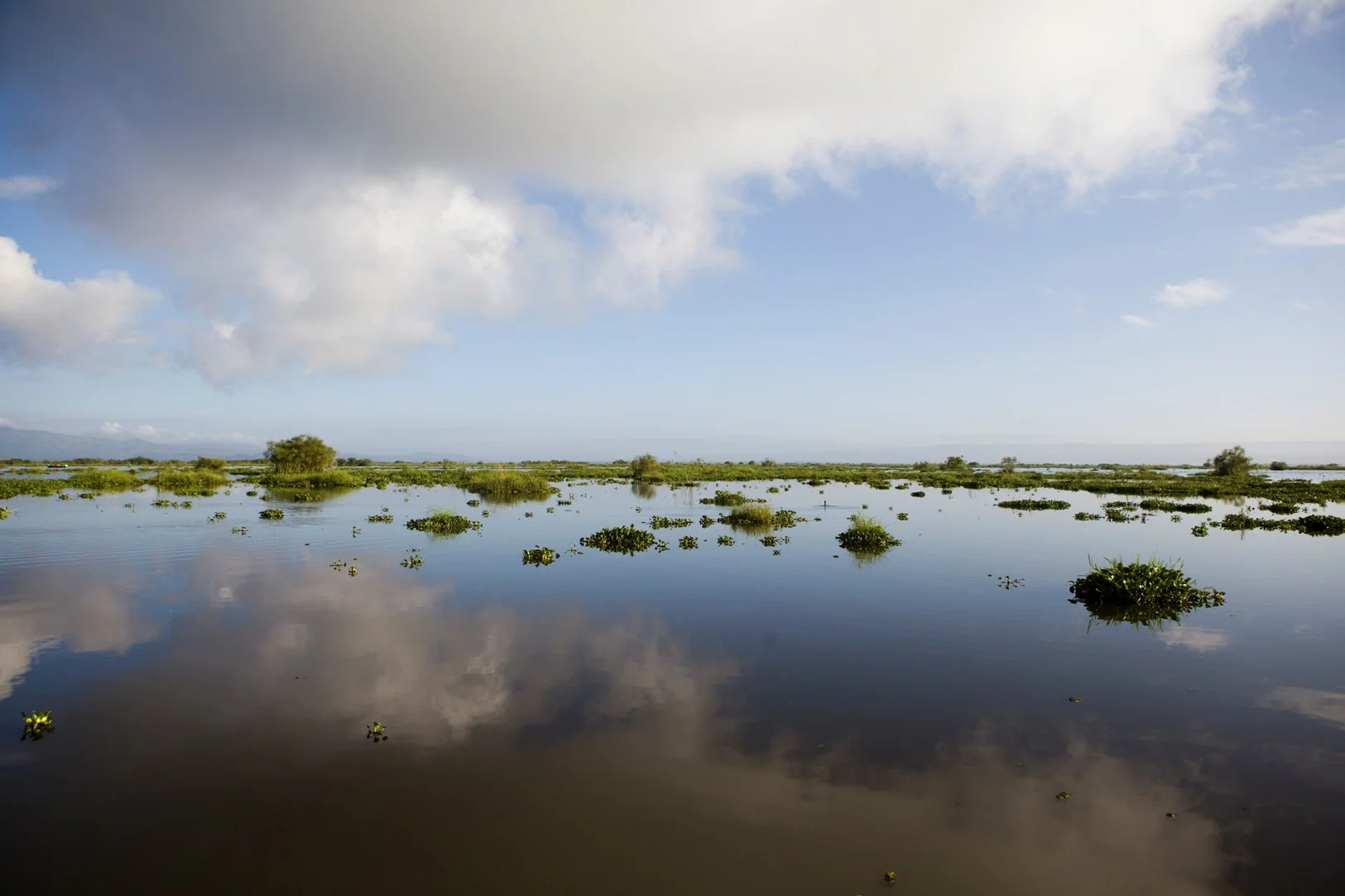
Lake Naivasha, Kenya. © Simon Rawles / WWF-NL
A Circular Model with Community at its Core
Sanivation’s circular model transforms what was once a public health hazard into a resource, closing the loop on waste while opening doors to livelihoods and cleaner communities across Africa. The process begins by safely treating faecal sludge.
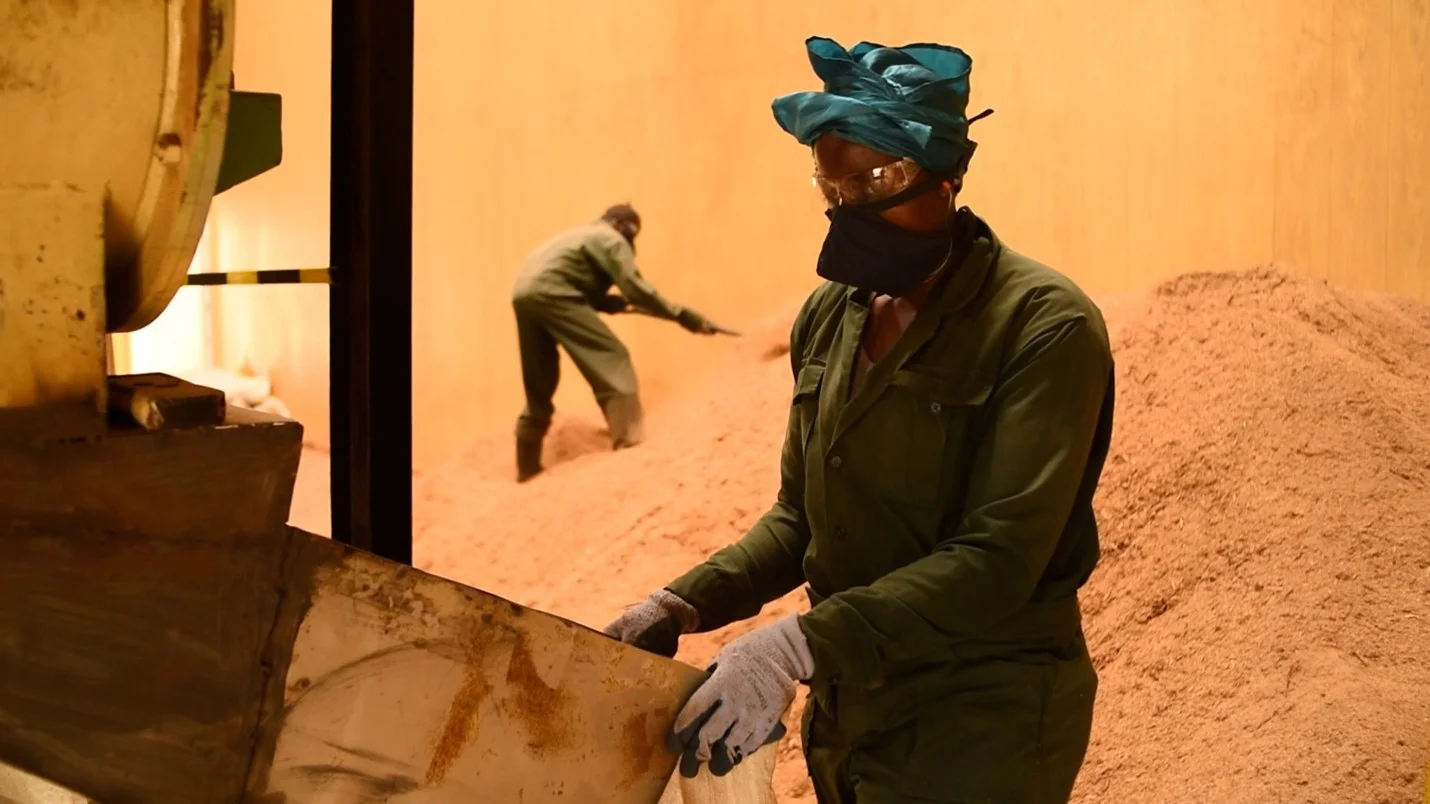
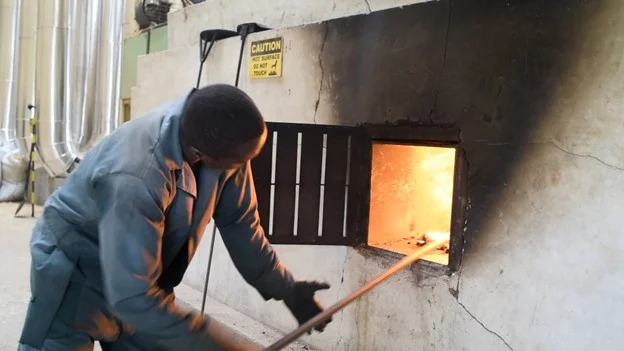
The material is then blended with wood waste and agricultural by‑products to be converted into briquettes that replace firewood at industrial scale.
These briquettes burn longer than firewood, reduce operational costs for businesses, and replace a major driver of local deforestation. For industrial users, this switch typically lowers energy expenses by 10-30 percent while reducing pressure on natural forests.
This model creates multiple layers of value:
- Sanitation becomes safe and sustainable, reducing disease risks and protecting Lake Naivasha.
- Agricultural and sawmill residues gain commercial worth, diverting waste from the environment.
- Local businesses access cleaner, more predictable fuel, supporting Kenya’s energy transition.
© Sanivation
How WWF and the DFCD Supported the Journey
For promising climate solutions like Sanivation’s, attracting early-stage finance has long been difficult. Waste‑to‑value models require significant upfront investment, long lead times, and close coordination with local governments - characteristics that often deter private investors. This is where the DFCD Origination Facility plays a catalytic role.
The DFCD team worked with Sanivation to:
- Strengthen the project’s technical and financial structure
- Address environmental and social safeguards
- Support engagement with local authorities and communities
- Develop a business case that could attract commercial capital
- Build confidence among investors by de‑risking early stages of the expansion
This support has contributed to Sanivation's growth into an investable enterprise capable of operating at a regional scale.
>> WATCH: Kenyan firm turning human waste to fuel with WWF-Kenya, DFCD Support
Investment Through PIDG: A Significant Step Forward
In 2025 this readiness was recognised when the Private Infrastructure Development Group (PIDG), through InfraCo Africa, committed USD 3.3 million in equity financing with and additional 500k in Technical Assistance to expand Sanivation’s waste‑to‑value operations.
The investment centres on the Naivasha Treatment Plant Expansion, which will increase treatment capacity and unlock the next stage of commercial scale.
>> Learn more about this investment
Impact on Health, Environment, and Climate
The expansion is projected to deliver meaningful and measurable outcomes:
Environmental Benefits
The replacement of firewood with briquettes also carries significant environmental implications. Reliance on unsustainable fuel sources has long accelerated deforestation and climate vulnerability across the region. By providing industrial off takers with a cleaner, more cost-effective fuel alternative, Sanivation reduces pressure on forests while cutting emissions, a dual benefit that aligns the commercial interests of its customers with broader environmental goals.
- Major reductions in untreated faecal waste entering Lake Naivasha and surrounding ecosystems
- Projected to avoid 700,000 tonnes of CO2 equivalent over its lifetime with a considerable climate impact.
- Reduced deforestation pressure due to lower demand for wood fuel
Health and Social Benefits
By introducing Sanivation treatment plants, faecal sludge is made useful to the community and taken out of the contamination of the environment. Safer waste management translates into reduced disease exposure for residents, and access to clean drinking water also improves when waterways are protected. Communities that have access to functioning sanitation infrastructure are communities where people can live, work, and thrive with greater security, self-respect and the quieter impact of dignity.
- Lower exposure to waterborne diseases
- Cleaner environments for families in non‑sewered neighbourhoods
- Improved gender equity through employment and income opportunities across the operations and supply chain
Economic and Energy Benefits
- Industrial users can reduce monthly fuel costs by 10-15 percent
- Between 10 and 20 major off‑takers are expected to adopt briquettes as a stable energy source
- Public‑private partnerships with local municipalities create long-term operational viability
By integrating environmental restoration, public health, and economic value, Sanivation’s model demonstrates what scalable WASH solutions can look like when community needs and climate impacts are considered from the start.
© Sanivation
Women and Youth
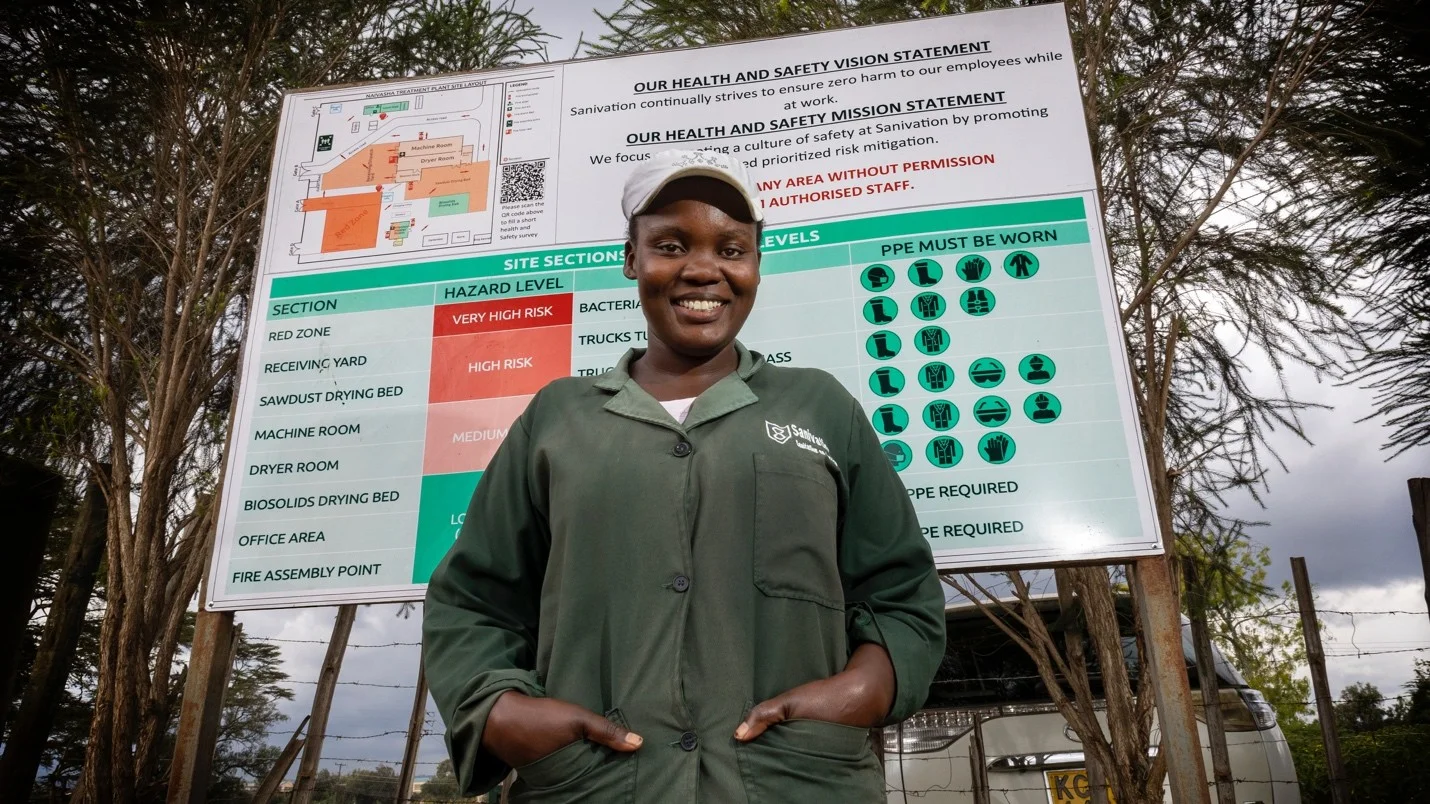
Women and youth shoulder most of the responsibility for household water, sanitation, and hygiene (WASH) management, and so they are among the most affected when these services fall short. Despite this, they are frequently excluded from the conversations and decisions that shape water and sanitation outcomes when they are the most capable of driving change.
In Kenya, and with ambitions to expand their reach, Sanivation is actively working to shift this narrative by recognising the intersectionality of gender and health by including through commitments to increase women's involvement within the organisation.
Kenya's progress towards Sustainable Development Goal 6, clean water and sanitation for all, has been slow, with national sanitation coverage at just 29 per cent. In this context, models that engage women and youth not only as beneficiaries but as decision-makers and economic participants are incremental to achieving sustainable change.
© Sanivation
Looking Ahead: A Model with Continental Potential
Across Africa, more than 7,000 towns face sanitation challenges like Naivasha’s. Many of them lack sewer systems, have limited municipal budgets, and rely on informal waste disposal methods that harm people and nature.
While Naivasha remains the flagship, the ambition is continental. Sanivation aims to demonstrate that waste‑to‑value systems can become a mainstream component of climate-resilient urban planning - not a niche solution.
© Sanivation
A Partnership Anchored in Possibility
Sanivation’s story illustrates the purpose of the DFCD: to identify high‑potential climate solutions, de‑risk them, and help them become investment ready. It also underscores an important truth: the most resilient infrastructure solutions are built with a deep understanding of the communities they serve.
What began as a business serving households directly has evolved into an investable enterprise with the potential to shape how cities across Africa manage waste, protect ecosystems, and create new economic pathways.
With its graduation, Sanivation steps confidently into its next chapter. And for investors, governments, and development partners, it serves as a compelling example of what becomes possible when community-driven innovation meets catalytic climate finance.
Reference List
WWF Netherlands / DFCD — Sanivation project page https://www.wwf.nl/wat-we-doen/aanpak/internationaal/Dutch-Fund-for-Climate-and-Development/sanivation
Empower Africa — PIDG backs Sanivation's Naivasha expansion with .3 million to scale waste-to-energy solutions in Kenya https://empowerafrica.com/pidg-backs-sanivations-naivasha-expansion-with-3-3-million-to-scale-waste-to-energy-solutions-in-kenya/
PIDG — Sanivation portfolio page https://pidg.org/portfolio/sanivation/
ARISE Consortium — Challenging the status of women and youth in the WASH sector in Kenyahttps://ariseconsortium.org/challenging-the-status-of-women-and-youth-in-the-wash-sector-in-kenya/
WHO/UNICEF Joint Monitoring Programme (JMP), 2019 — Kenya water and sanitation coverage figures (59% water, 29% sanitation). Cited within the ARISE source above; the JMP report itself was not directly provided.
WASREB (Water Services Regulatory Board), 2020 — County-level sanitation systems data. Cited within the ARISE source above; the WASREB report itself was not directly provided