From finance to forests
The Dutch Fund for Climate and Development (DFCD) has approved support for SilviCarbon Agroforestry Sole Co., Ltd (SCALA), a sustainable forestry and carbon project developer in Lao PDR backed by its main shareholder UPC, to scale climate-resilient reforestation, biodiversity protection and community-based landscape restoration.
In Lao PDR, restoring forests is not simply a question of planting trees. Many landscapes targeted for restoration have been shaped by decades of pressure, from the legacy of unexploded ordnance to forest conversion driven by shifting agricultural practices, including slash-and-burn cultivation for crops such as cassava as an important source of income for rural communities. Over time, this loss of forest cover contributes to declining soil health, erosion, reduced water retention capacity and increased risks for agricultural water security.
Bringing these areas back into productive use requires long-term investment models that work for communities, ecosystems and investors alike.
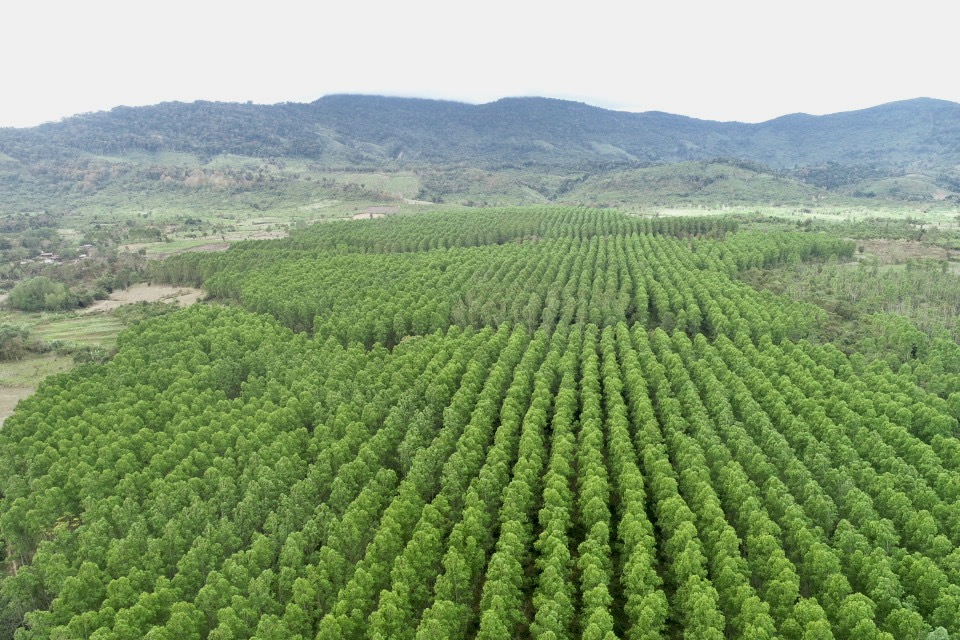
This is the challenge SCALA is taking on. Its model combines clearance of unexploded ordinance, sustainable forestry, carbon finance and community partnerships to restore degraded landscapes while making the land safe and building a commercially viable model for climate-resilient land use.
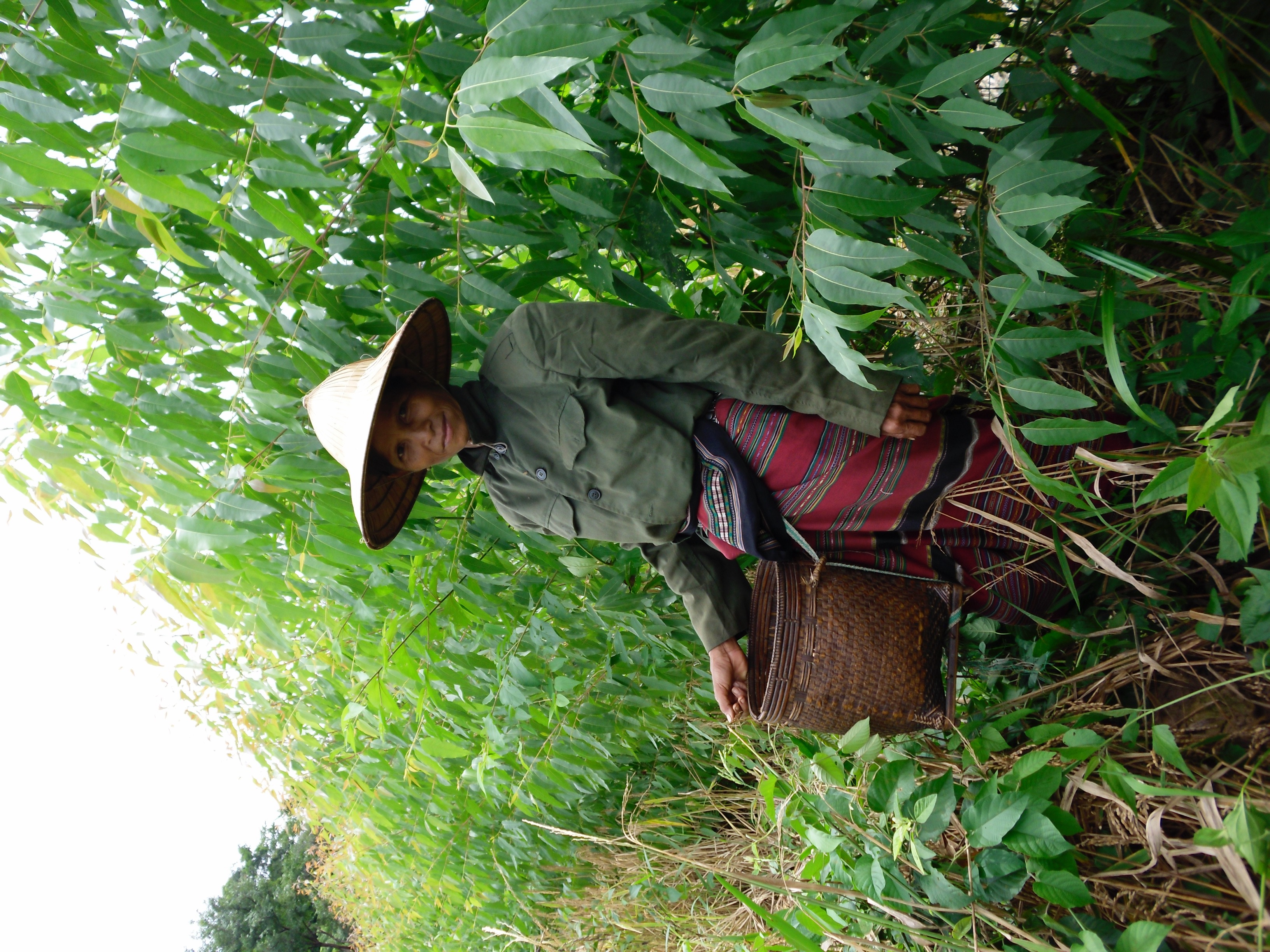
Through the DFCD Origination Facility, SNV is partnering with SCALA and UPC to strengthen SCALA’s investment readiness and support the expansion of this model. Building on SNV’s existing work in the same landscape, this includes participatory land-use planning, piloting smallholder timber growing and agroforestry models, and strengthening agreements that balance productive land use with forest protection.
By creating clearer land boundaries and expanding opportunities for households to generate income from sustainable forestry and agroforestry, the partnership aims to support both improved livelihoods and long-term landscape restoration.
The partnership was officially launched through events in Vientiane, Lao PDR and The Hague, the Netherlands, bringing together government representatives, development finance institutions, private sector partners and the climate finance community.
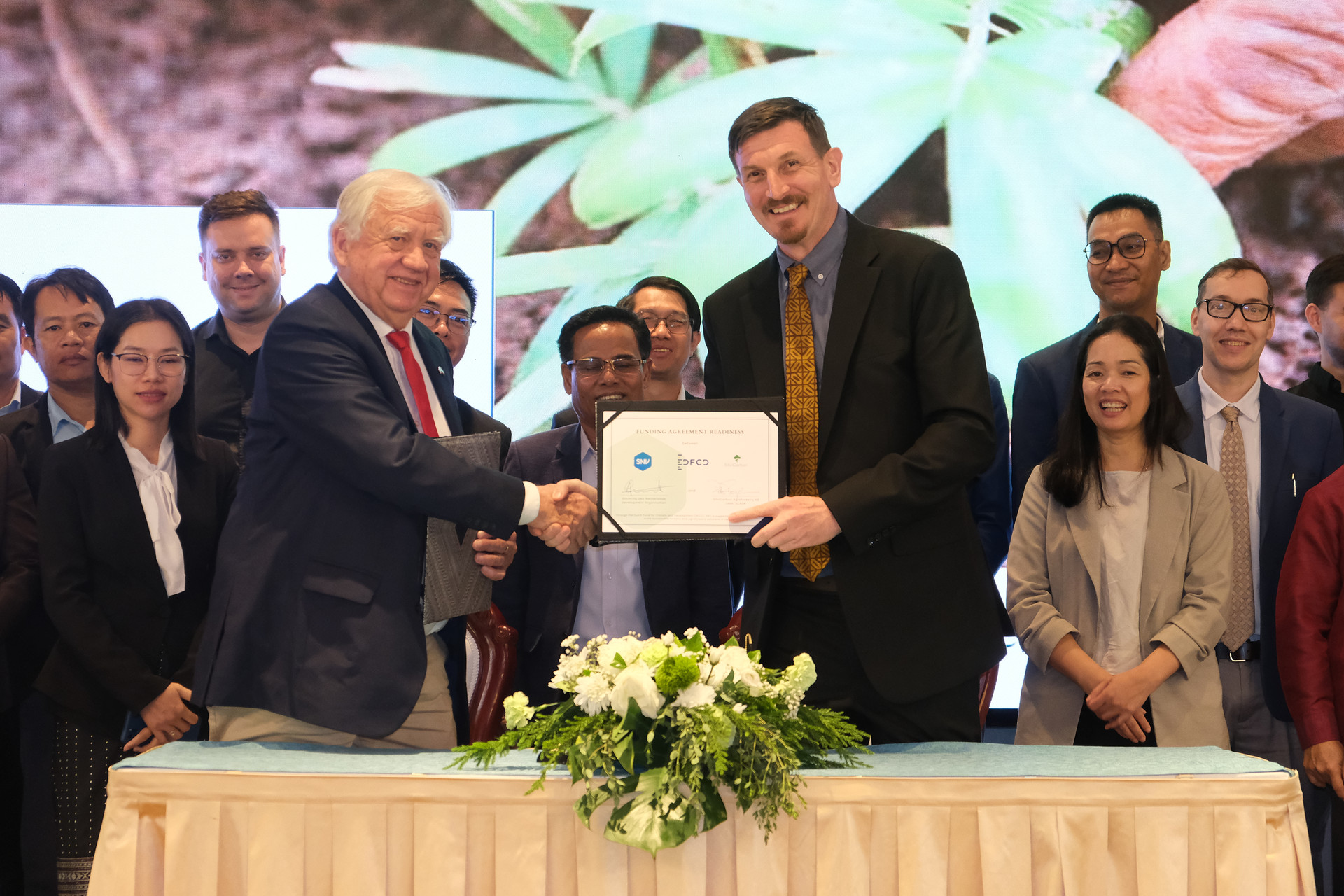 Peter Fogde, SCALA CEO (left) and Alex Grumbley, SNV Laos Country Director, at a signing ceremony in Vientaine, Laos.
From degraded land to productive landscapes
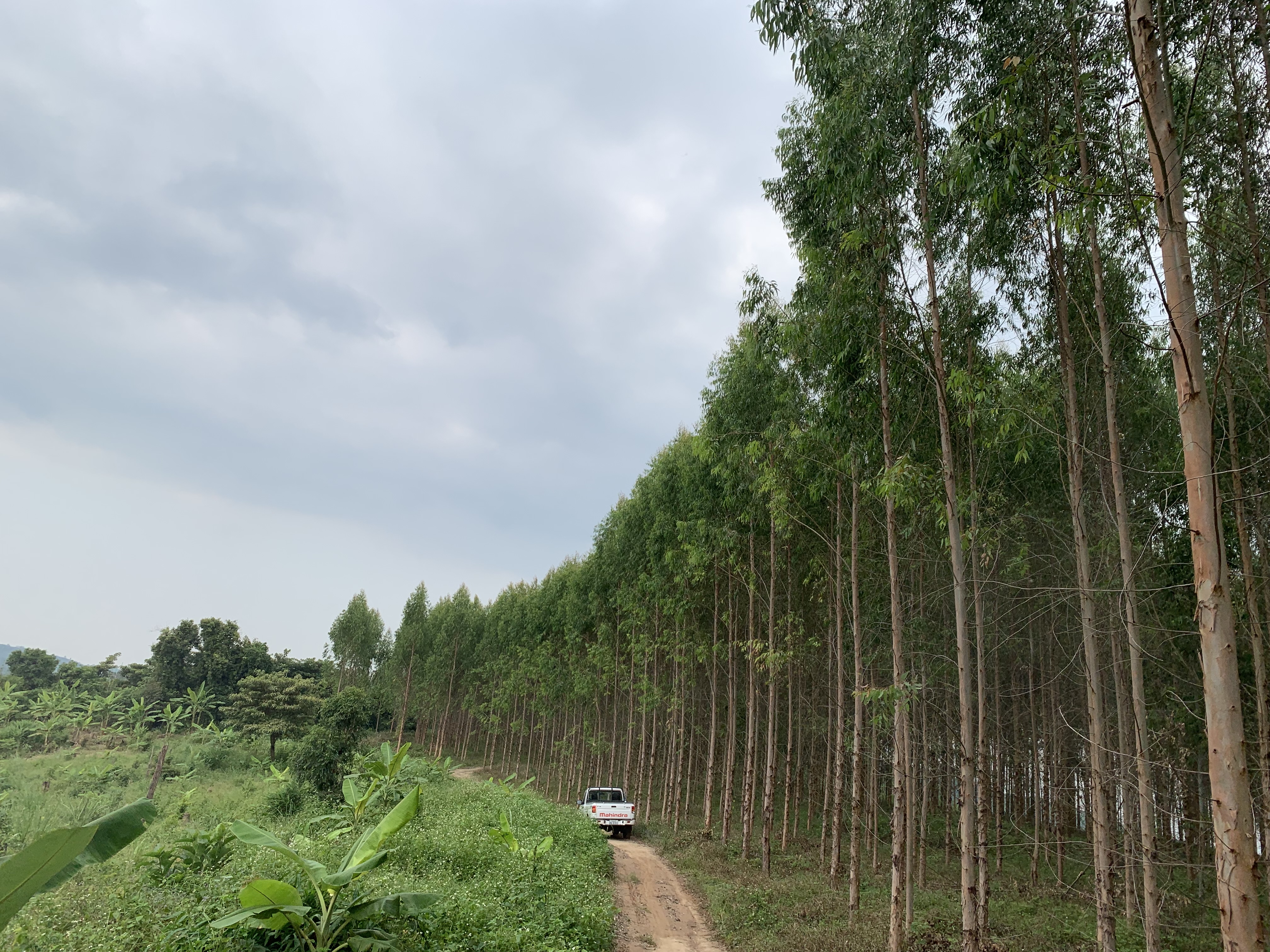
SCALA builds on more than three decades of forestry experience in Lao PDR, developing plantation forests on degraded land where natural regeneration has been limited by shifting agriculture and invasive species. Combining sustainable timber production with high-integrity carbon credit generation, SCALA currently manages approximately 5,000 hectares and aims to expand to 10,000 hectares by 2030.
However, SCALA’s approach extends beyond commercial forestry. The company works within a wider landscape model: protecting natural forest areas, reducing pressure on biodiversity hotspots, supporting agroforestry activities, creating employment opportunities, and supporting locally managed village development funds (initiated and financed by SCALA). Through fast-growing timber trees, smallholder agroforestry models and improved land management, SCALA aims to create economic alternatives that can provide stable income opportunities while reducing reliance on practices that contribute to deforestation.
“Restoring degraded landscapes requires financially sustainable and business-based models that work for communities, ecosystems and investors. With the support of partners like the Dutch Fund for Climate and Development and FMO’s Mobilising Finance for Forests programme, we can demonstrate that sustainable forestry can deliver long-term value for people, nature and climate,” said Mr Peter Fogde, CEO of SCALA.
Bridging local expertise with investment readiness
Through the DFCD Origination Facility, SCALA will receive grant funding and tailored technical assistance to prepare for long-term investment while strengthening environmental and social outcomes. Support focuses on participatory landscape planning, biodiversity and impact monitoring, environmental and social safeguards, and inclusive agroforestry approaches.
This builds on SNV’s broader landscape experience in Lao PDR, including through programmes such as the Biodiverse Landscapes Fund (BLF) and the Climate Resilient Livelihoods project in the same landscape.
The support will also help SCALA strengthen its carbon certification strategy, enabling the company to generate high-quality carbon credits as part of a commercially sustainable model for landscape restoration. The DFCD Origination Facility support aims to help unlock approximately USD 12 million in future investment, enabling SCALA to expand its operations and demonstrate a viable model for private investment in sustainable forestry.
“Investing in climate solutions in Least Developed Countries requires understanding the realities on the ground. These are complex landscapes where climate risks, community needs, biodiversity and business models are closely connected. Through the DFCD Origination Facility, SNV brings local presence and technical expertise to help companies like SCALA navigate that complexity — strengthening both their investment readiness and their long-term impact,” said Alex Downs, Regional Investment Officer at SNV.
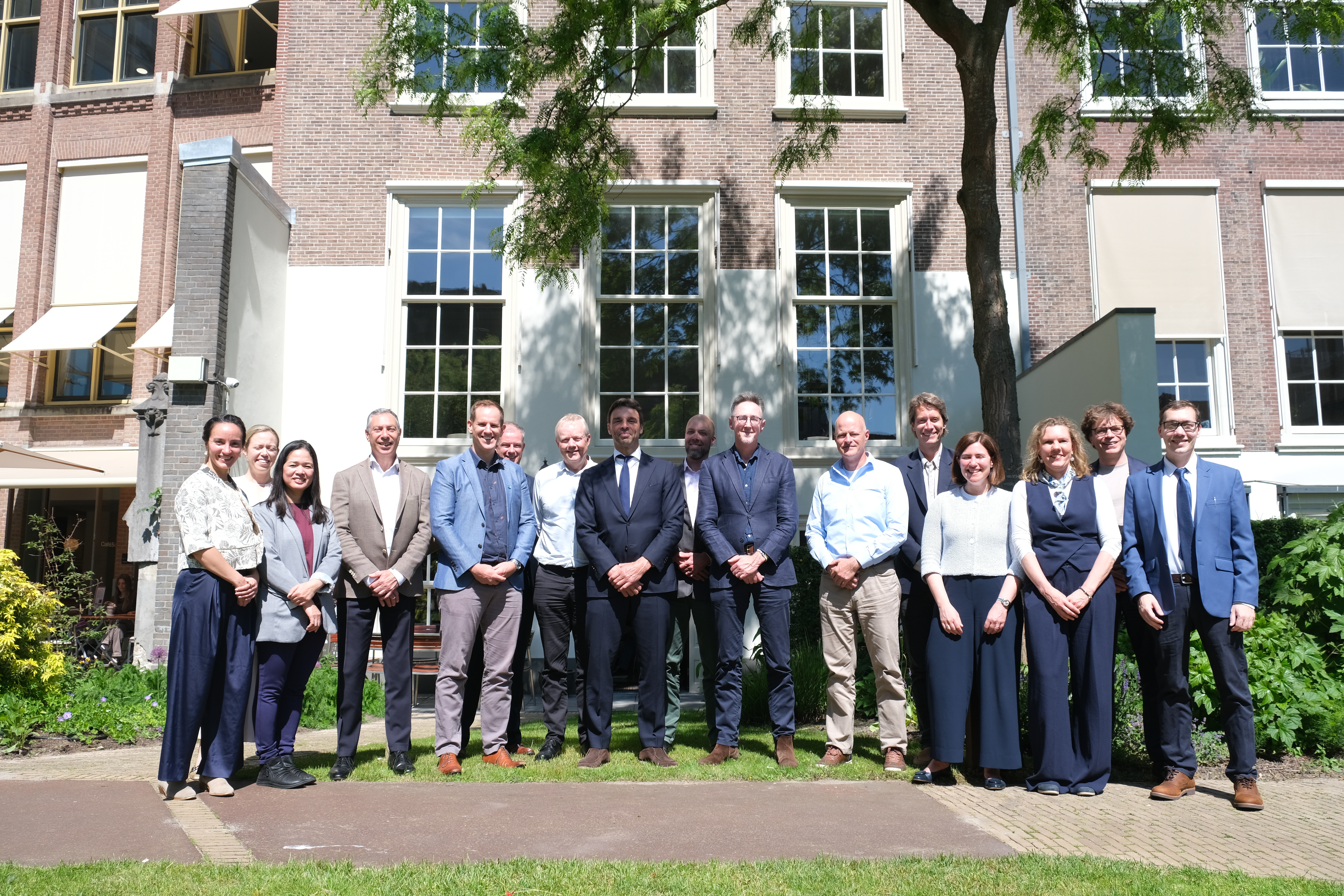 Partners from SilviCarbon, UPC, FMO, SNV and the Dutch Ministry of Foreign Affairs gathered for a dialogue event in The Hague.
Creating new pathways for forestry investment in LDCs
Forestry projects face a particular financing challenge: the environmental and social benefits are significant, but the upfront costs are high and returns take time. In markets like Lao PDR, additional risks (from land-use planning and community engagement to evolving carbon certification requirements) can make it difficult for private investors to enter.
The SCALA partnership aims to bridge this gap through a “club deal” approach, bringing together UPC, DFCD’s Origination Facility and FMO’s Mobilising Finance for Forests (MFF) programme.
Together, the partners combine private sector ambition, catalytic finance and technical expertise to strengthen both SCALA’s commercial foundations and long-term landscape impact.
Scaling impact for climate, nature and communities
By 2030, SCALA’s model is expected to contribute to:
- Around 41,000 tonnes of CO₂ equivalent avoided or removed annually through reforestation and conservation
- More than 6,000 hectares of degraded land made safe from clearance of UXO and brought under sustainable management or protection
- Improved livelihood opportunities for approximately 1,500 households
- Reduced pressure on natural forests and strengthened biodiversity protection
The initiative directly supports Lao PDR’s climate, forestry and green growth ambitions, while contributing to global efforts to scale investment into nature-based solutions.
To learn more, read the Project Snapshot.